
Product Catalogue
Download our latest product list


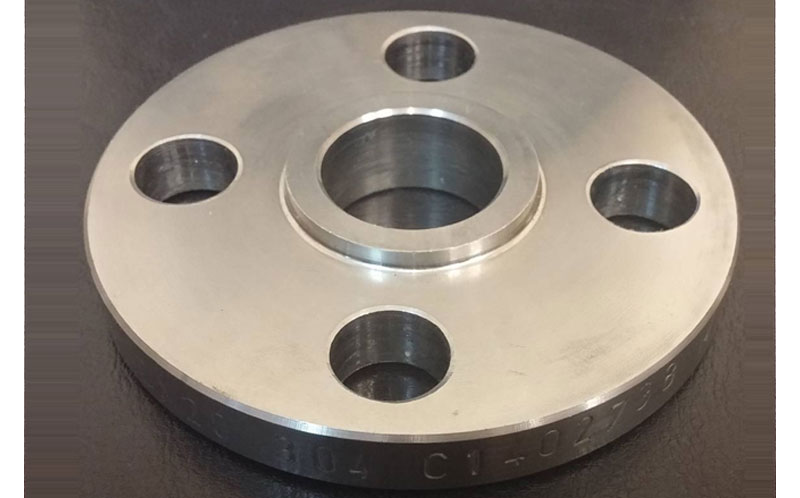
A Slip-On Flange is a type of flange designed to slide over the pipe and be welded both inside and outside for a secure connection. These flanges are commonly used in systems where ease of installation and cost-efficiency are important. The Slip-On design allows for quick assembly, making them ideal for applications where pipes need to be connected without complicated fitting requirements.
Typically made from carbon steel, stainless steel, and alloy steels, slip-on flanges are highly resistant to corrosion, ensuring long-lasting performance in various industrial environments. They are ideal for systems requiring medium pressure and temperature resistance, and are commonly found in industries like oil & gas, chemical processing, power generation, and water treatment.
Slip-On flanges are available in a variety of sizes and pressure ratings, and can be paired with different types of pipes, including those with beveled, plain, or threaded ends. Their easy installation and cost-effective nature make them a popular choice for plumbing, HVAC, and industrial piping systems, offering a reliable and leak-proof connection to ensure smooth fluid and gas flow throughout the network.
| Specification | Details |
|---|---|
| Product | Pipe Fitting Slip-On Flange |
| Size Range | 1/2" to 24" (DN15 to DN600) – Custom sizes available |
| Types |
Slip-On Flange: A flange that slips over the pipe and is welded both inside and outside for a secure connection. Standard Slip-On Flange: The typical slip-on flange used in most piping systems, designed for medium-pressure applications. |
| Wall Thickness | Sch 10, Sch 20, Sch 40, Sch 80, Sch 160 (As per ASME/ANSI standards) |
| Standards | ASME B16.5, ASME B16.47, ISO 7005, EN 1092-1, JIS B2220 |
| Material Grades |
Carbon Steel: ASTM A105, A350 LF2 Stainless Steel: 304, 304L, 316, 316L Alloy Steel: ASTM A182 F11, F22 Nickel Alloys: Inconel, Monel, Hastelloy Other Materials: Brass, Copper, Aluminum |
| Manufacturing Process | Welded, Forged, Cast |
| Ends | Slip-On End (no threading) |
| Surface Finish | Black, Pickled, Sand Blasted, Polished, Anti-Rust Coated |
| Testing & Certification | Hydrostatic Test, Non-Destructive Testing (NDT), PMI Test, Third-Party Inspection |
| Applications | Oil & Gas, Chemical Processing, Petrochemical, Power Generation, Water Treatment, HVAC, Plumbing, Marine |
| Special Features | Easy Installation, Cost-Effective, Versatile, Secure Welding, Leak-Proof Connection |
| Slip-On Flange Design Features |
Simple Installation: Designed to slip over the pipe and welded inside and outside for a quick and reliable connection. Cost-Effective: Generally more affordable than other flange types while offering a secure seal. Corrosion Resistance: Manufactured from materials like stainless steel and carbon steel for long-lasting durability in harsh environments. Pressure Ratings: Suitable for medium-pressure applications, making them ideal for a wide range of industrial systems. |
Our Slip-On Flanges provide easy installation, cost-effectiveness, and robust performance, making them ideal for a variety of piping applications requiring secure and reliable connections.
Slip-on flanges are designed for quick and easy installation, as they simply slip over the pipe and are welded on both sides for a secure connection.
Slip-on flanges offer a cost-effective solution for connecting pipes, as they are easier and quicker to install compared to other flange types, reducing labor costs.
Crafted from high-quality materials like carbon steel, stainless steel, and alloys, slip-on flanges offer excellent resistance to pressure, temperature, and harsh environments.
Manufactured to meet international standards like ASME B16.5, ISO 7005, and JIS B2220, ensuring consistent quality and compatibility in critical piping systems.
Slip-on flanges are used in a wide variety of applications, including oil & gas, chemical processing, power generation, and water treatment, making them a versatile choice for industrial systems.
Slip-on flanges offer leak-proof sealing due to their secure welding on both sides, ensuring long-term durability and safety in piping systems.